
WCSIPL designs and deploys integrated Building Management Systems (BMS) that centralize control of HVAC, lighting, fire alarm, access control, and energy systems — enabling real-time monitoring, automated scheduling, and data-driven optimization for smarter, more efficient facilities.
An Integrated Building Management System (BMS) is a centralized, computer-based control platform that monitors, manages, and automates all critical building services — HVAC, lighting, fire detection, security, access control, vertical transport, and energy metering — from a single unified interface.
Modern BMS platforms use open protocols like BACnet, Modbus, KNX, and IoT gateways to integrate disparate subsystems from different manufacturers into one cohesive system. This eliminates siloed operations, enables cross-system automation (e.g., fire alarm triggering HVAC shutdown and elevator recall), and provides facility managers with complete visibility through real-time dashboards, historical trending, and automated alarm management.
WCSIPL's BMS engineers design and commission integrated automation solutions tailored to your facility's complexity — from single-building deployments with 500 I/O points to campus-level distributed systems with 50,000+ points across multiple buildings, all with web-based remote access, mobile alerts, and enterprise-level reporting.
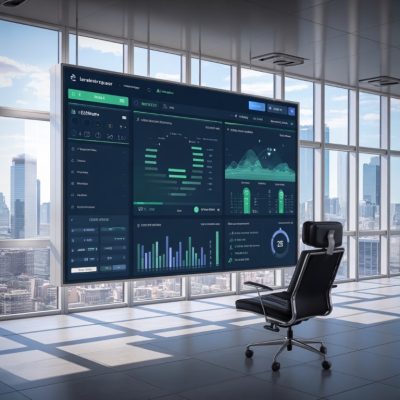
Every WCSIPL BMS deployment is engineered for seamless integration, intelligent automation, and actionable building intelligence.
A unified graphical interface displaying real-time status of all building systems — HVAC temperatures, lighting zones, fire alarm states, access control events, energy consumption, and equipment running hours — all on a single-screen floor plan or system overview dashboard.
Web-based and mobile-app access to your BMS from anywhere in the world — monitor live parameters, acknowledge alarms, change setpoints, override equipment, and view trend logs remotely via secure VPN or cloud connectivity with role-based user permissions.
Time-based and event-based automation schedules for HVAC, lighting, and equipment — including occupancy-based controls, seasonal setpoint optimization, demand-controlled ventilation, and holiday/weekend scheduling to eliminate energy waste during unoccupied periods.
Intelligent alarm prioritization with configurable thresholds, escalation chains, SMS/email/push notifications, alarm acknowledgment workflows, and root-cause analysis — filtering noise from critical alerts so facility teams focus on what truly matters.
Built-in energy monitoring dashboards with real-time kWh tracking, demand profiling, power factor analysis, zone-wise consumption breakdown, and automated ESG/GRI reporting — identifying energy waste patterns and quantifying savings from BMS optimization.
Native support for BACnet IP/MSTP, Modbus TCP/RTU, KNX, LonWorks, MQTT, OPC-UA, and RESTful APIs — seamlessly integrating HVAC controllers, VFDs, chillers, fire panels, access controllers, energy meters, and IoT sensors regardless of manufacturer.
17+ years of HVAC expertise gives us the domain knowledge to build BMS systems that actually deliver operational value.
HVAC-native BMS engineers who understand process logic, not just IT integration — writing control strategies that optimize comfort and energy.
Proven experience integrating HVAC, fire, access, lighting, and energy systems across 200+ facilities using open protocols and custom gateways.
Proprietary control sequences tailored to your facility — not generic templates — including PID tuning, cascade control, and advanced optimization algorithms.
Comprehensive operator training, documented SOPs, and 30-day post-commissioning support ensuring your team is fully confident to manage the BMS independently.
Long-term AMC with periodic health checks, software updates, point additions, dashboard enhancements, and 24/7 emergency remote support.
A structured methodology from requirement analysis to go-live, ensuring every control point delivers value.
Our engineers design customized BMS architectures tailored to your facility’s requirements, ensuring optimal integration, scalability, and performance.
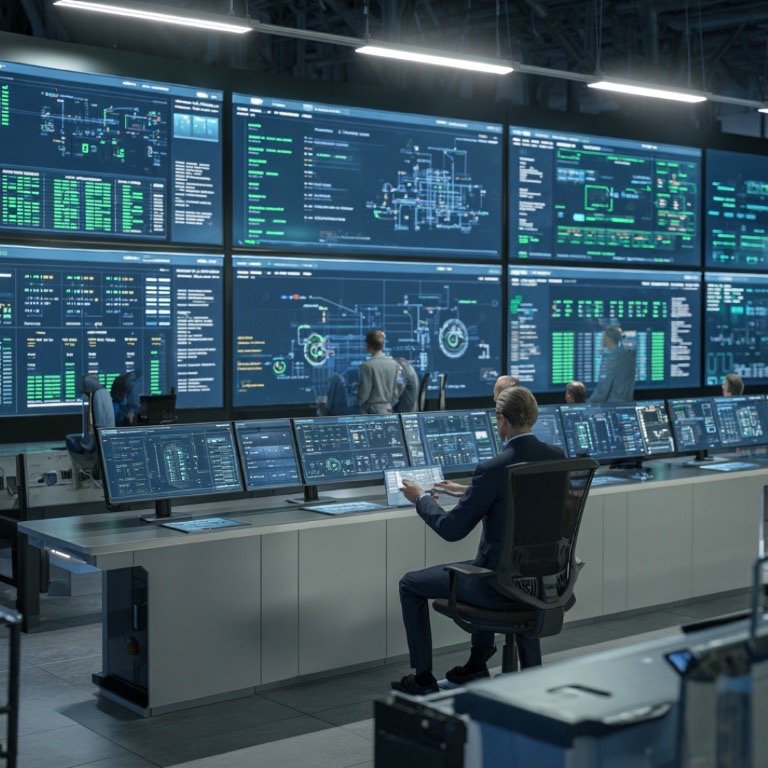
From hardware installation, software configuration, and sensor deployment to system commissioning, we manage end-to-end implementation of BMS solutions.
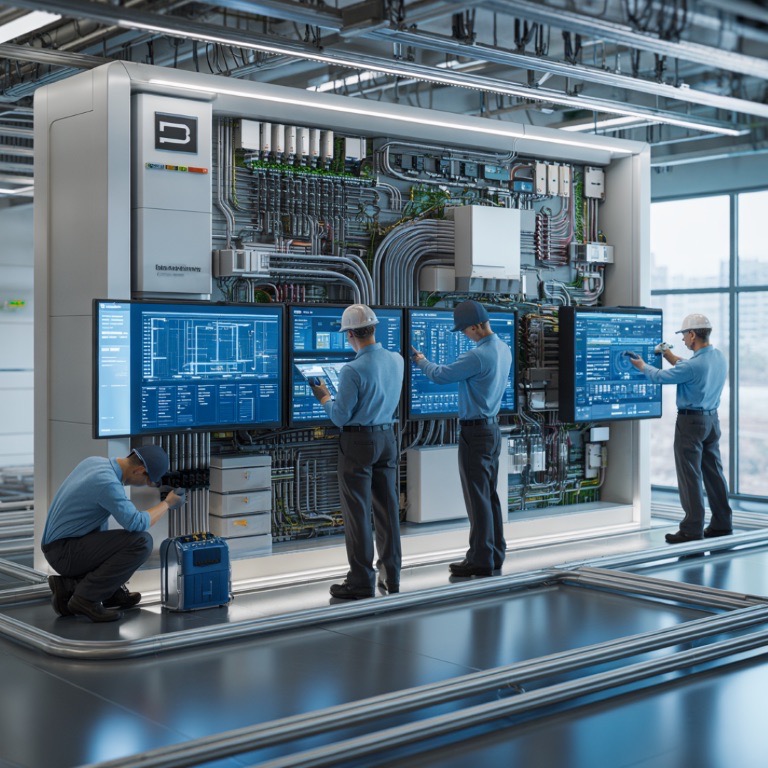
BMS allows real-time monitoring, demand-based control, and predictive maintenance, reducing energy consumption and operational costs.
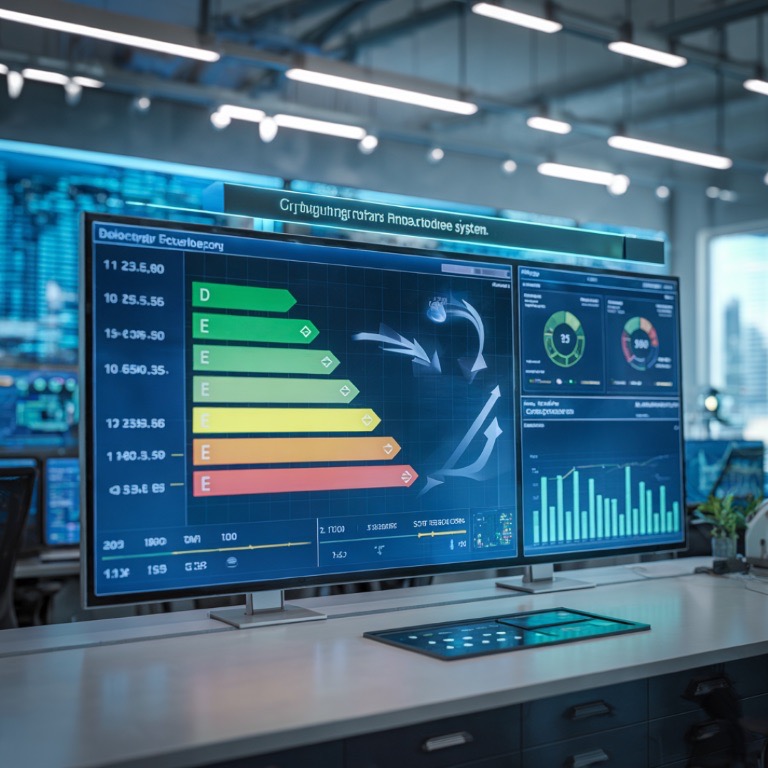
Integrated BMS ensures continuous monitoring of fire, HVAC, plumbing, and electrical systems, providing early alerts for potential issues.

Our solutions offer intuitive dashboards, mobile apps, and remote access, enabling facility managers to monitor and control operations effortlessly.
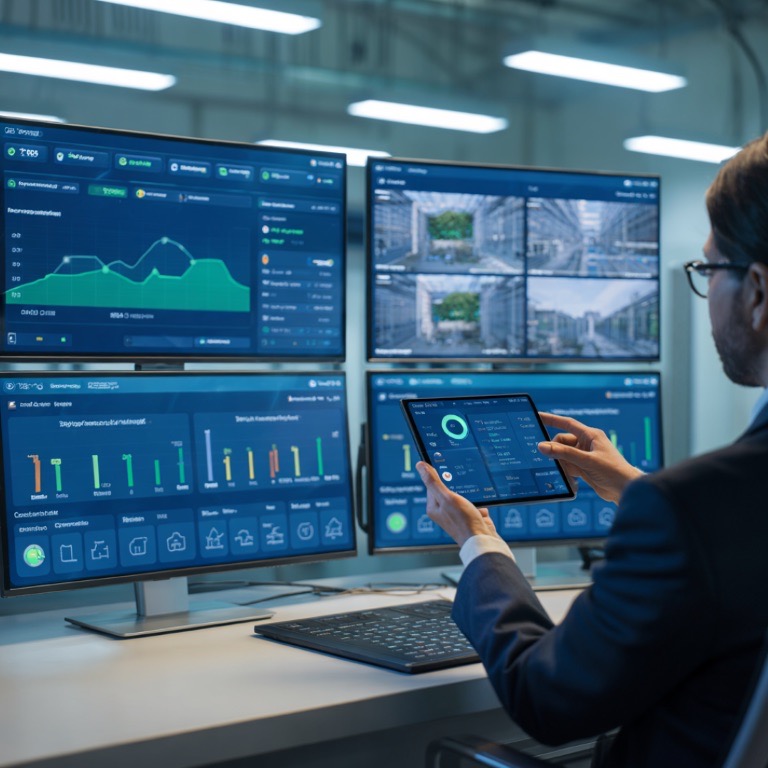
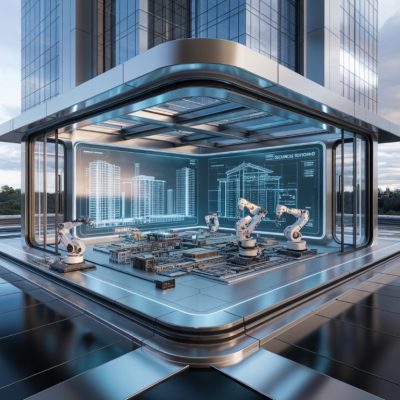
End-to-end building automation capabilities — from design to long-term optimization.
Comprehensive BMS design including Point-to-Point schedules, control strategy narratives, I/O count optimization, network architecture, panel layout drawings, BACnet/Modbus mapping, and integration specifications — aligned with ASHRAE 135, CIBSE guidelines, and project-specific requirements.
Custom DDC programming for all controller tiers — from application-specific controllers (AHU, chiller plant, VAV) to general-purpose controllers — including startup/shutdown sequences, PID tuning, demand-limiting algorithms, optimal start/stop, and fault-tolerant logic with manual overrides.
High-resolution graphical interfaces including interactive floor plans, HVAC system schematics, electrical single-line diagrams, energy dashboards, alarm summary screens, trend analysis views, and executive KPI reports — all accessible via web browser and mobile apps with responsive design.
Integration engineering for chillers (Carrier, Daikin, Trane), VFDs (ABB, Siemens, Danfoss), fire alarm panels (Notifier, Honeywell, Simplex), access control systems, CCTV, energy meters (Schneider, Siemens), UPS, and DG sets — using BACnet, Modbus, OPC-UA, or custom protocol drivers.
Systematic commissioning including I/O verification, sensor calibration, actuator stroke testing, control sequence validation, alarm simulation, network stress testing, integration checkout, and SAT documentation — ensuring every point responds correctly before handover to the operations team.
Long-term BMS support including periodic health checks, software/firmware updates, database archiving, control strategy optimization based on operational data, additional point integration, dashboard enhancements, cyber-security hardening, and 24/7 remote monitoring with SLA-backed response times.
Understand why an integrated BMS delivers exponentially more value than independent, siloed building systems.
| Parameter | Traditional Standalone Systems | WCSIPL Integrated BMS |
|---|---|---|
| Centralized Dashboard | ✗ Separate panels for each system | ✓ Single unified interface for all systems |
| Cross-System Automation | ✗ No inter-system communication | ✓ Fire → HVAC shutdown, lighting → access linkage |
| Remote Access | ✗ On-site only, limited visibility | ✓ Web/mobile access from anywhere globally |
| Energy Monitoring | ✗ Monthly utility bills only | ✓ Real-time kWh, demand, and zone-wise analytics |
| Automated Scheduling | ✗ Manual switch-on/off by operators | ✓ Time & occupancy-based auto scheduling |
| Alarm Management | ✗ Local buzzers, no prioritization | ✓ Smart alarms with SMS/email escalation |
| Historical Trending | ✗ No data logging or analysis | ✓ Configurable trends, export, and reporting |
| Energy Savings | ✗ No optimization capability | ✓ 20-30% reduction through intelligent controls |
| Scalability | ✗ Rigid, manufacturer-locked | ✓ Open protocol, infinitely expandable |
| Operational Efficiency | ✗ Multiple operators, high manpower | ✓ Single operator manages entire facility |
Common queries about Building Management Systems answered by our automation engineering team.
BMS (Building Management System) is specifically designed for building services — HVAC, lighting, fire safety, access control — with focus on comfort, energy efficiency, and occupant safety. SCADA (Supervisory Control and Data Acquisition) is used for industrial process control — manufacturing lines, water treatment, power distribution — with focus on process variables, production throughput, and industrial safety. BMS uses BACnet/KNX protocols; SCADA typically uses Modbus, OPC-UA, or proprietary industrial protocols.
WCSIPL is platform-agnostic and works with leading BMS platforms including Siemens Desigo CC, Honeywell EBI/Enterprise Buildings Integrator, Johnson Controls Metasys, Schneider EcoStruxure Building Operation, Delta DVP/BMS, and Trend Control Systems. We also deploy open-source platforms like Niagara Framework for projects requiring maximum flexibility and multi-vendor integration.
Yes, absolutely. WCSIPL specializes in BMS retrofit projects where we add intelligent control to existing HVAC, lighting, and fire systems without disrupting building operations. We install wireless sensors where cabling is impractical, use protocol gateways to integrate with existing equipment controllers, and phase the implementation floor-by-floor or system-by-system to minimize operational impact.
Industry benchmarks and our own project data show typical energy savings of 20-30% after BMS implementation. Key savings come from: optimized start/stop scheduling (5-8%), demand-controlled ventilation (4-6%), setpoint optimization based on occupancy (3-5%), chiller plant sequencing (4-7%), and elimination of manual waste (3-5%). Payback period is typically 2-4 years depending on building size and existing energy consumption.
Yes, and WCSIPL takes it seriously. We implement defense-in-depth security including: VLAN segmentation for BMS traffic, firewall rules limiting BMS network access, encrypted communication (HTTPS, BACnet/SC), strong password policies with MFA for remote access, regular firmware updates, network monitoring, and audit logging. We follow NIST Cybersecurity Framework and ICS-CERT guidelines for building automation systems.
It varies significantly by building type and scope: Small office buildings (500-1,500 points), medium commercial buildings (2,000-5,000 points), large IT parks/malls (5,000-15,000 points), industrial/campus facilities (10,000-50,000+ points). Each AHU typically requires 30-50 points, each VAV box 6-10 points, and each chiller plant 80-150 points. We provide detailed point counts during the design phase.